
How HRMS Software Improves Employee Productivity in SMEs
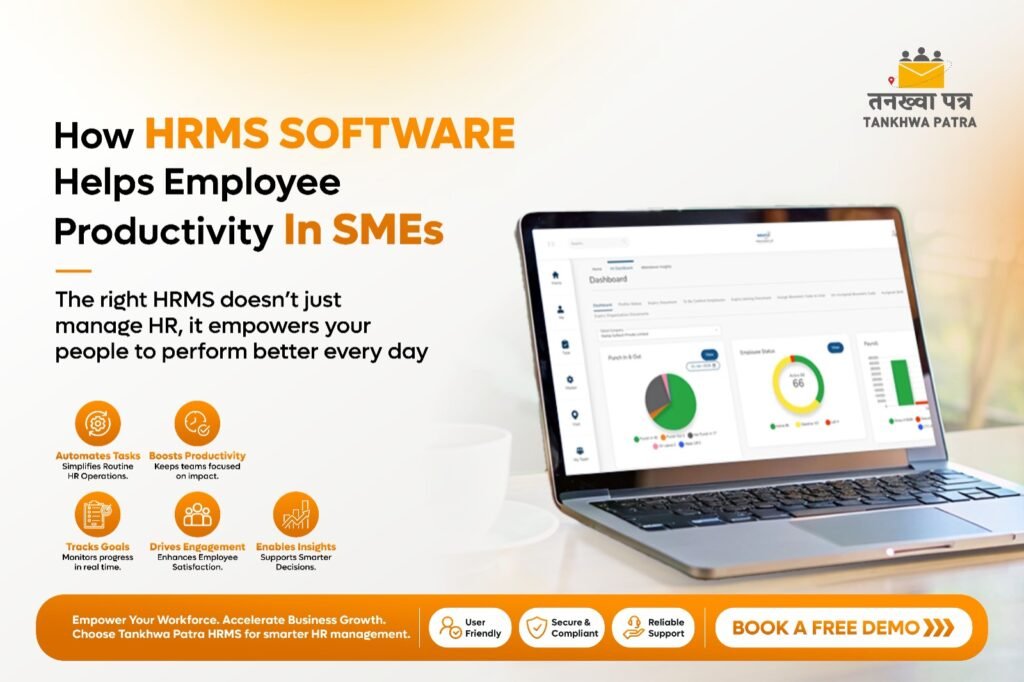
Employee productivity is one of the most critical factors for the success of small and medium-sized enterprises (SMEs). However, many SMEs struggle with manual HR processes, inefficient workflows, and lack of real-time data — all of which directly impact employee performance.
This is where HRMS (Human Resource Management System) software plays a transformative role.
In this blog, we’ll explore how HRMS software improves employee productivity in SMEs and why adopting the right HR solution can accelerate business growth.
What is HRMS Software?
HRMS software is a centralized platform that automates and manages key HR functions such as:
- Payroll processing
- Attendance tracking
- Leave management
- Employee records
- Compliance management
- Performance tracking
Solutions like Tankhwa Patra integrate all these processes into one system, helping SMEs streamline operations and improve efficiency.
Why Employee Productivity Matters for SMEs
Unlike large enterprises, SMEs operate with limited resources and smaller teams. This makes employee productivity even more important.
Challenges faced by SMEs include:
- Time wasted on manual HR tasks
- Lack of transparency in attendance
- Delayed payroll processing
- Poor communication between HR and employees
- Limited access to performance insights
An HRMS helps solve these challenges by automating routine tasks and enabling better workforce management.
1. Reduces Time Spent on Manual Tasks
Manual HR processes consume a significant amount of time, including:
- Calculating payroll
- Managing attendance sheets
- Approving leaves
- Generating reports
HRMS software automates these repetitive tasks, allowing employees and HR teams to focus on high-value activities.
👉 Result: Employees spend more time on productive work instead of administrative tasks.
2. Improves Attendance Accuracy
Attendance tracking plays a major role in productivity.
Modern AI powered HRMS platforms like Tankhwa Patra offer:
- Face recognition attendance
- Geo-fencing for field employees
- Mobile-based attendance
These features ensure accurate tracking of working hours and reduce time theft.
👉 Result: Better discipline and accountability across teams.
3. Streamlines Communication
Poor communication between employees and HR teams can lead to delays and confusion.
HRMS software improves communication by:
- Providing employee self-service (ESS) portals
- Enabling instant notifications
- Offering AI chatbot support for HR queries
Employees can access policies, payslips, and leave balances without depending on HR.
👉 Result: Faster communication and reduced dependency on HR teams.
4. Enhances Employee Experience
A smooth HR experience directly impacts productivity.
With HRMS software:
- Employees can apply for leave easily
- Payslips are available instantly
- Attendance records are transparent
- HR processes are simplified
When employees face fewer administrative hurdles, they can focus more on their work.
👉 Result: Higher employee satisfaction and engagement.
5. Enables Data-Driven Decision Making
HRMS platforms provide real-time analytics and reports such as:
- Attendance trends
- Overtime reports
- Payroll costs
- Employee performance data
Managers can use this data to identify productivity gaps and improve workforce planning.
👉 Result: Better decisions that improve overall productivity.
6. Simplifies Payroll & Reduces Errors
Payroll errors can negatively affect employee morale and productivity.
HRMS software ensures:
- Accurate salary calculations
- Timely payroll processing
- Automated tax deductions
This builds trust and ensures employees remain focused on their work.
👉 Result: Improved employee confidence and reduced payroll-related issues.
7. Supports Remote and Field Workforce
With the rise of remote and field-based roles, traditional attendance systems are no longer effective.
HRMS software like Tankhwa Patra provides:
- Geo-location-based attendance
- Mobile check-in/check-out
- Real-time tracking
👉 Result: Better management of remote teams and improved productivity.
8. Reduces HR Workload
HR teams in SMEs often handle multiple responsibilities with limited resources.
By automating:
- Payroll
- Attendance
- Compliance
- Reporting
HRMS software reduces workload significantly.
👉 Result: HR teams can focus on strategic initiatives like employee engagement and talent development.
Key Benefits of HRMS for Productivity
Implementing HRMS software delivers measurable benefits:
- Saves 60–80% of HR administrative time
- Reduces payroll and attendance errors
- Improves employee engagement
- Enhances transparency
- Enables faster decision-making
Why Tankhwa Patra is Ideal for SMEs
Tankhwa Patra is built specifically for Indian SMEs and offers features that directly improve productivity:
- Face recognition attendance
- Geo-fencing for field staff
- AI chatbot for HR queries
- Mobile-first HRMS platform
- Payroll with full compliance support
Its easy implementation and affordable pricing make it a practical solution for growing businesses.
Conclusion
Employee productivity is the backbone of any successful SME. However, manual HR processes and lack of automation can slow down operations and reduce efficiency.
HRMS software simplifies HR management, improves accuracy, enhances employee experience, and enables better decision-making — all of which contribute to higher productivity.
For SMEs looking to scale efficiently, adopting a smart HRMS like Tankhwa Patra can be a game-changing decision.
Ready to Boost Employee Productivity?
Discover how Tankhwa Patra can help your business automate HR processes and improve workforce efficiency.
👉 Book a free demo today and transform your HR operations.
Phone: +91 70418 01390 , +91 89809 38940
